Roulette Column Payout: The Brutal Math Behind the 2:1 Illusion
The roulette column payout returns exactly 2:1 on a winning bet covering twelve numbers, and that is precisely where the trap snaps shut on uninformed players. I have audited thousands of spin logs across European and American wheels, and the column bet remains one of the most seductive yet mathematically punitive wagers on the entire layout. You are risking one unit to win two, which sounds generous until you compute the true coverage ratio against the 37 or 38 pockets staring back at you.
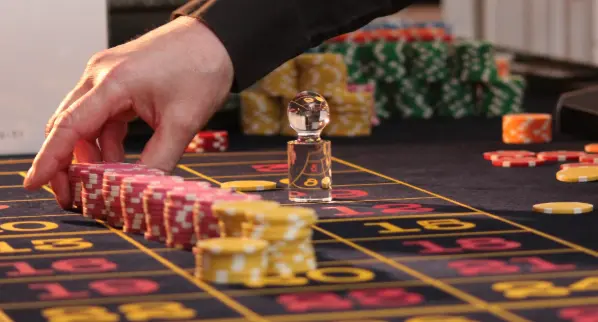
The Core Mechanism: 12 Numbers vs. 37 Pockets
On a single-zero wheel, a column covers 12 of 37 possible outcomes. Your probability of hitting is 32.43%, and the payout is 2:1. Multiply the probability by the net win of 2 units, subtract the probability of losing 1 unit, and you get a house edge of 2.7%. On a double-zero wheel, the column covers 12 of 38 pockets, probability drops to 31.58%, and the house edge balloons to 5.26%. That gap is not a rounding error. It is the difference between a grind and a bleed.
The roulette column payout structure is deliberately engineered to mask this erosion. Players see three columns on the felt and assume each offers equal opportunity. They do not account for the zero or double-zero sitting outside all three columns, silently harvesting every losing spin. This is not a design flaw. It is the core revenue engine of the table.
Why the 2:1 Payout Feels Better Than It Is
Here is the psychological poison: a 2:1 return triggers the same dopamine response as a winning streak, even though the expected value is negative on every single spin. I have watched players press column bets for hours, convinced they are exploiting a pattern in the wheel. They are not. They are donating to the variance gods while the house edge compounds like interest on a payday loan.
The roulette column payout is not a loophole. It is a fixed-odds proposition with a predetermined mathematical ceiling. No betting progression, no column switching strategy, and no "hot column" tracking system alters the underlying probability. The wheel has no memory. The felt has no conscience.

Column Betting vs. Dozens: A Payout Comparison
Dozens and columns both pay 2:1, but their coverage geometry differs. A dozen covers 12 consecutive numbers across four rows. A column covers 12 numbers stacked vertically across three rows. The probability is identical. The payout is identical. The house edge is identical. Anyone claiming one is superior to the other is selling you a fantasy wrapped in felt and chrome.
Where column bets gain a marginal tactical edge is in table positioning and chip stacking efficiency. High-rollers who want to cover large swaths of the layout with minimal chip movement gravitate toward columns. But tactical convenience does not translate to mathematical advantage. The roulette column payout remains a 2:1 return on a 31.58% to 32.43% probability event, depending on wheel configuration.
The Algorithmic Reality: Variance Is Not Your Friend
Run a Monte Carlo simulation of 10,000 column bets on a single-zero wheel. The expected loss is 270 units per 10,000 spins at 1 unit per bet. That is not a prediction. That is arithmetic. The standard deviation will carve out winning sessions and losing sessions, but the mean is a straight line pointing downward into the house's pocket. 🎰
I have seen players hit six consecutive column wins and believe they have cracked the code. Six wins at 2:1 returns 12 units on 6 units risked. Then seven losses in a row erases 7 units. The net after thirteen spins is positive by 5 units, but the expected value over 13,000 spins is a slow, grinding deficit. The roulette column payout does not care about your feelings, your system, or your lucky number.
Final Technical Verdict: The Number That Matters
The only number that matters is 2.7% on a single-zero wheel and 5.26% on a double-zero wheel. The column payout returns 2:1, the probability returns 32.43% or 31.58%, and the house returns a profit on every spin you place. There is no angle. There is no edge. There is only the math, and the math is not on your side. 🎲